Signed in as:
filler@godaddy.com

This was a new event for 2026 and provided a breath of fresh air for the way that it streamlined the Silverstone Classic of old and produced two days of packed grids and superb racing, all based around the Heritage pits and paddock rather than split across the entire infield as before.
Featuring 21 races, including 15 from the nine Motor Racing Legends grids, the event attracted more than 300 entries, including up to 50 cars for the Pre-’66 GT Sprint alone.
Ten decades of motoring history were represented on track, from a 1924 Bentley 3/4½ litre to a 2015 BMW Z4 GT3.
Trialled by Motor Racing Legends at the end of the 2025 season, this initiative has proved to be one of the most popular new racing concepts for decades.
The opportunity to send generations of racing families out to compete in pre-1966 MGBs, a choice that won’t intimidate novices, was a masterstroke and has led to people who have been racing far faster cars across the decades becoming teary-eyed sharing racing experiences with a son, daughter, uncle or grandchild.
A grid of 20 lined up for the inaugural 60-minute two-driver race, but had grown to 36 by the time of the Donington Historic Festival in the spring.
The revival of a race first held at Oulton Park 70 years ago was a clear highlight of the Gold Cup meeting held at the end of August.
Instigated by enthusiasts Tom and Helen Hardman, who put in months of work to realise their vision, the revival was embraced by owners of pre-war Grand Prix cars.
A grid of 20 cars lined up, including nine ERAs, with drivers travelling from Guernsey, Switzerland, Canada and Germany to take part.
A covered paddock and drivers’ club elevated the presentation and experience for competitors, and the Hardmans are already working on a repeat performance in 2027.
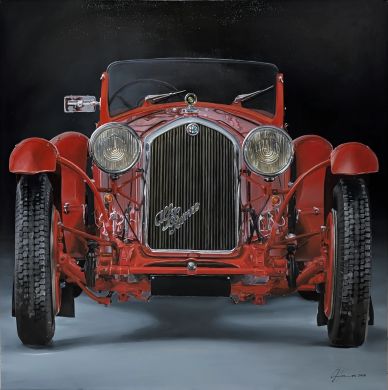
Treating an historic car in the way that a portrait artist might treat a human subject during a portrait sitting is a fascinating approach. The car is separated entirely from its background and location. It differs from side to side in a way that an artist notices, unlike a photographer. The viewer joins the artist in her personal observation of the car as she sees it.
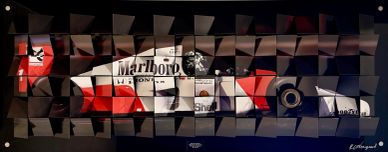
A remarkable piece of work that is both photography and sculpture combined in a unique way. The composition combines the drama of a fleeting glimpse of a Formula One car seen at a racetrack, with the possibility to closely examine an incredible piece of engineering that includes a component from the actual car.
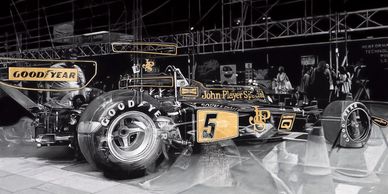
An artwork that invites the viewer to see an object through a clear glass window. Something that prevents both painter and spectator from being allowed to get close to the race car, their view is confused by the reflections of the street. Both have to choose between those reflections and the apparently unapproachable Formula One car, they feel both inside and outside at the same time.

There are moments in motoring history that can only be celebrated once - and places where they can only truly be celebrated.
On 7 August 1926, nine cars lined up at Brooklands for Britain’s first Grand Prix - officially the Grand Prix of the Royal Automobile Club. One hundred years later, Grand Prix racing came home.
The Brooklands Museum Grand Prix Centenary was the biggest and most ambitious event in the Museum’s history in recent years: a once-in-a-century celebration bringing together more than 120 Grand Prix and Formula One cars, representing over 50 marques and a century of racing history, at the very place where Britain’s Grand Prix story began.
The ambition had been adventurous - 100 Grand Prix cars for 100 years. What Brooklands ultimately assembled went significantly beyond that.
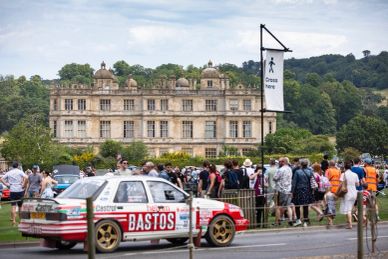
The Longleat Motor Show Weekender, held for the first time on 27–28 June 2026, set out to create something genuinely different: a celebration bringing together historic motoring, motorsport, art, engineering and one of Britain's most extraordinary visitor destinations.
The inaugural event formed part of the celebrations marking 60 years since Longleat opened the first drive-through safari outside Africa in 1966.
More than 9,000 visitors attended across the weekend, demonstrating the appeal of bringing historic motoring to a much broader family audience.
What made the event special was not simply its scale. It was the way it used the history and landscape of Longleat to bring motoring heritage to life.
Perhaps nothing demonstrated this better than the return of rally cars to the estate. Historic, Group B and more modern rally cars were demonstrated live three times each day on specially created routes within the estate.
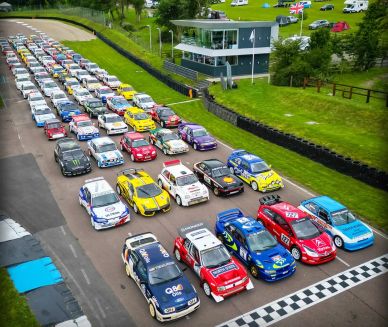
Held in June 2026 at the birthplace of rallycross, Lydden Hill, Lydden Legend Festival was headlined by rallycross Group B machinery, the legendary and rare machines and demonstration races creating a jaw-dropping spectacle quite different from seeing cars perform demonstrations one at a time.
Over 100 cars took part. A further unique element included a ‘family relay’, whereby rallycross fathers and their offspring took part in a driver-change demonstration race. Slow speed parade laps were also held on each day, akin to those run in international rallycross events of the 80s and 90s.
The 2024 incarnation of this event was a finalist in the Competitive Event category of the Historic Awards. The 2026 version belongs firmly in the Motoring Spectacle category, as there were no competitive rounds this time, but rather an extraordinary selection of live-action demonstration races to thrill the crowd, as befits the brief for this category.
The Aston Martin Heritage Trust Museum may be modest in size, but it delivers an exceptional visitor experience that exceeds expectations. Its aim is to make the heritage of one of Britain’s most iconic automotive brands accessible, relevant and inspiring to all.
The main exhibitions are refreshed and rotated twice each year, ensuring visitors encounter new stories, vehicles and perspectives with every visit. This approach encourages repeat attendance and allows the museum to display cars that the public would not ordinarily have the opportunity to see. By combining rare vehicles, archival material, artefacts and engaging interpretation, exhibitions are created that appeal to enthusiasts, historians and casual visitors alike.
Innovation is central to the offering, including a successful Object in Focus programme which provides visitors with access to objects, archives and artefacts that would otherwise remain stored behind closed doors.
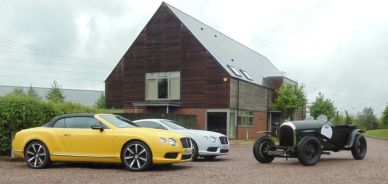
In December 2025 the Bentley Foundation Museum, part of the W.O. Bentley Memorial Foundation, announced that it had been awarded Accredited Museum status by Arts Council England. Adminstered by Arts Council England on behalf of the UK Accreditation Partnership, Accreditation is the benchmark for well-run Museums and Galleries.
The Museum is the only museum dedicated to sharing the story of the Bentley Legend, telling the story of Bentley the man and Bentley the car from Walter Owen’s (W.O.) birth in 1888 to the present day.
From W.O. Bentley’s birth certificate to the latest magazine articles, the unparalleled collections of the Foundation's Library and Archive are the ultimate resource for owners, researchers, authors, journalists, media and enthusiasts – all supported by the in-depth knowledge of the Foundation's staff, trustees, volunteers and specialists with decades of expertise at their fingertips.
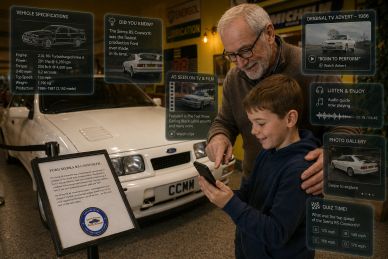
County Classics Motor Museum, founded in November 2023, was the lifelong ambition of local businessman and car enthusiast Patrick Hawkins, who bought and transformed a former department store, spending several years to transform it into a motor museum.
The museum showcases over 100 classic cars, more than 140 motorcycles (spanning from 1915 to the 1990s), an aeroplane, and various items of motoring memorabilia.
Tragically, Patrick had less than two years to enjoy the fulfilment of his dream, passing away at the age of 68 in August 2025. The non-profit museum continues to operate under its dedicated team of staff and volunteers, hosting commemorative events like this year's inaugural 'Patrick Day' gathering in his honour. Over the past year and in understandably difficult circumstances, the museum has evolved, building a community outreach programme, expanding the fleet of vehicles, partnering with Corgi to release authentic 1:43 scale die-cast models of some of the vehicles featured in the museum's collection and unveiling an exciting new interactive pilot experience designed to bring classic vehicles to life like never before.
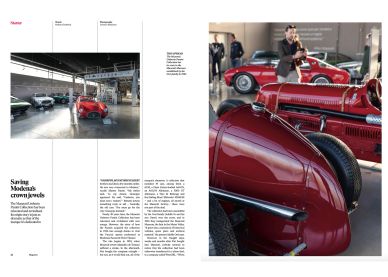
Nathan Chadwick’s story about a 1996 struggle to keep Maserati’s historic car collection together — rather than having the 19 cars sold separately at auction — impressed the judges particularly for its engaging writing style and the thoroughness of the reporting. The piece, published in Magneto, extensively quoted the three surviving characters involved, and the author faithfully represented the drama and jeopardy of the episode.
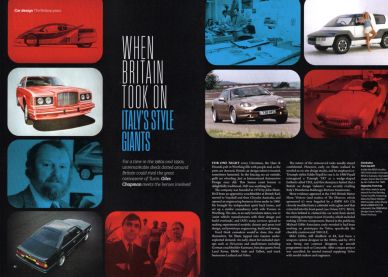
In his story for Octane Giles Chapman used his skill at providing historical context to describe an era when three British car design companies — TWR, MGA and IAD — seemed to be on course to rival Italian strongholds like Pininfarina and Bertone. The key to this progress was the backing and ambition of powerful entrepreneurs, since deceased. The main asset was the skill of a cohort of young designers emerging from the UK’s design institutions, which remain just as productive today.
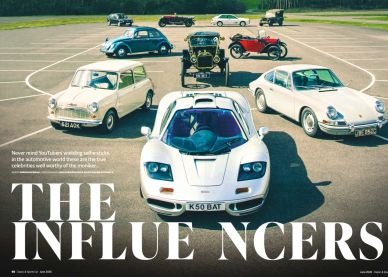
Simon Hucknall’s ambitious project, which set out to identify the 100 most influential classic cars of the 20th century in a magnificent 25-page production, impressed the judges for scale, clarity and ambition. As well as corralling the 10 most influential of the cars for a never-to-be-repeated cover shoot for Classic & Sports Car, Hucknall also assembled a panel of experts to explain the significance of each finalist, inevitably creating a controversy that has turned into an energetic debate among enthusiasts ever since.
Tom and Helen Hardman deserve recognition for an outstanding example of personal endeavour: turning an idea to revive the historic Seaman Trophy into a reality. Through months of persistence, persuasion and collaboration, they brought together a 22-car field of significant pre-war racing machinery at Oulton Park, including nine ERAs and cars representing ten marques. Their contribution went far beyond encouraging entries; they worked tirelessly with owners, drivers and organisers, helped overcome practical and financial challenges, and ensured the event was welcoming to competitors, families and spectators. Most importantly, they demonstrated that important historic racing cars can still be brought together and raced in a way that inspires enthusiasts and creates opportunities for future generations. Their vision, relationships, adaptability and determination have not only revived an important piece of racing history but created a model for future events.
Father-and-son Carl and Sam have spent four years turning the then eight-year old Sam's simple question – “Why isn’t there a motoring magazine for kids?” – into Roadster!, an independent, not-for-profit platform giving children a genuine opportunity to engage with motoring.
Through twelve issues and increasing involvement from young contributors, they have created something that educates, inspires and, most importantly, gives the next generation a voice and a sense of belonging within the motoring world.
Each issue has broadened what Roadster! can be, but the most important development during the eligibility period has been the increasing focus on involving other children, giving young Roadster! journalists opportunities to cover events on the magazine's behalf. Roadster! operates with an adult‑supported but child‑led philosophy. Adults provide the access, safeguarding, structure and editorial support. The children provide the genuine curiosity, questions and creative energy.
The restoration of the Sunbeam 1000hp speed record car has taken many years of hard work, ingenuity and dedication from Ian Stanfield and his team at the National Motor Museum. This year saw it all come to fruition.
The Sunbeam 1000hp World Land Speed Record Breaking vehicle has now returned to the USA and it will be returning to Florida's Daytona Beach for the 100 year anniversary of Sir Henry Segrave’s 203.792 mph land speed record on March 29th 2027.
Ian and his team have shown exceptional skill, persistence and dedication in restoring the iconic machine and returning this remarkable piece of British motoring history back to life.
Their three-year effort represents an extraordinary technical and historic achievement and deserves recognition not just for the hours spent, but arriving on deadline, fully functioning for the shipping deadline to arrive at the post-restoration debut at Pebble Beach Concours, showcasing British engineering craftsmanship on a world stage. A remarkable achievement, making us all feel proud to be British.
This car was the fourth production car Rolls-Royce made. Exhibited at the Paris Salon exhibition in December 1904, it became the first production Rolls-Royce to be displayed to the public, it is a significant part of British automotive history.
It’s no exaggeration to say that Chassis 20154 helped to sow the seeds of excellence in engineering and craftsmanship that the Rolls Royce company is renowned for globally.
This three-year project was carried out by Fairbourne Carriages, who are now one of the very few remaining companies with the heritage skills and knowledge needed to produce the coachwork using period techniques. This required extensive research carried out with Chris and Ben Petty, who oversaw repairs and reproduction of any missing original parts.
The aim was to reproduce the vehicle’s original Barker Park Phaeton coachwork in Primrose Yellow with black lining, and to preserve this important vehicle for the future, as it was originally presented to the world.
The Thomas Flatiron is arguably the most innovative Grand Prix car built in the UK before the War. Built by land speed record holder Parry Thomas, it was entered in the first two British Grand Prix at Brooklands and also broke a series of world endurance records.
Following a successful career at Brooklands it was fitted with a diesel engine in 1935 and was then used to break the world oil-engine record for under 3000cc cars. Dismantled in the early 50s, it was preserved by an enthusiast owner. Geraint Owen was selected to be the next custodian and acquired the car in 2014.
As an amateur restorer, Geraint, has undertaken a detailed and complex 12-year restoration at his home workshop focussing on the preservation of as much of the original car as possible. Research undertaken has finally cleared up the mystery as to which of the two Flatirons this car is (the other was scrapped in Canada in 1955).
The result was ready to take centre stage at the centenary celebrations at Brooklands of the first British GP in 1926.
This car was originally purchased as a rolling chassis by coach builder Letourneur Et Marchand in January 1939 and was first registered in February 1940.
Mark Lowther purchased the car in 1994 as a non-running, badly deteriorated example. From the very beginning, he approached the project with the intention of carrying out a comprehensive restoration, stripping the car down to its bare chassis and beginning the long process of returning it to the road.
What makes this restoration particularly remarkable is the extent to which the work was carried out by Mark himself. Much of the restoration was undertaken in his own time, after work and at weekends, occasionally with the invaluable assistance of friends, as he personally tackled the engineering, mechanical and restoration challenges that arose throughout the project.
In mid-September 2025 the Bugatti won its class at the Concours of Elegance, but further final tweaks were required before Mark considered the restoration complete. By the end of 2025, Mark had brought the restoration to an exceptionally high standard, satisfying the requirements of road safety while retaining the character, elegance and period appearance of the car.
Well-known to the VSCC community, Archie has made the most of every opportunity presented to him; resulting in him becoming one of the most versatile young drivers in historic motorsport, competing in a diverse range of vehicles spanning different eras and disciplines. This talent afforded him the opportunity to compete at the highest level this year, racing in the fiercely competitive SF Edge Trophy at Goodwood Members meeting in April. Qualifying on pole, finishing second in Part 1 and first in Part 2. To have the confidence and ability to compete at Goodwood at such a young age, particularly in Edwardian open-wheel racing cars, is impressive. But to be this competitive alongside some of the established ‘old masters’ of historic motorsport demonstrates exceptional skill and composure.
Archie’s passion for driving is equalled to his commitment to working under the bonnet – starting his own engineering business, developing technical expertise and practical experience needed to turn his passion into a sustainable career. However, what truly distinguishes Archie is his commitment to supporting fellow young enthusiasts and his growing role as an ambassador for the sport.
Gracie’s advocacy, energy and determination to support and elevate others are particularly commendable. Formerly a StarterMotor Ambassador herself, she left university and immediately took up a full-time role as Marketing and Events Specialist for StarterMotor in June 2025 – she has thrown herself into every corner of the organisation, be it presenting on the public stage, leading education days, providing content for publishers and webinars or standing shoulder-to-shoulder with industry leaders.
What truly distinguishes Gracie, however, is her commitment to opening doors for others. A passionate advocate for young people in motorsport, she actively challenges perceptions and is helping make our industry more accessible & welcoming. Gracie consistently turns advocacy into meaningful action.
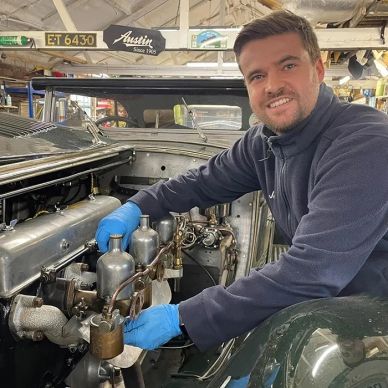
2022 was the first time Joe was shortlisted for the RAC’s Young Achiever award, nominated for his involvement in setting up a body for young apprentices to network within the industry. Last year Joe became Workshop Manager before taking the significant step of acquiring Tim Walker Restorations Ltd in May of this year. At just 29 years old, he has assumed responsibility for an established business with a proud heritage dating back to 1979, leading a skilled team of eight engineers, including two apprentices. His journey from apprentice to owner reflects not only exceptional determination and ability, but also his ambition to build on the company’s reputation while innovating and evolving. Equally important is Joe’s commitment to the industry beyond his own business.
